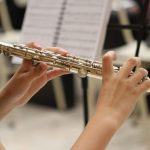
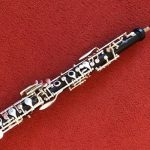
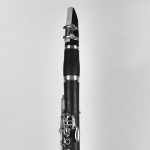
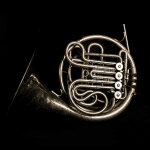
Most of our exercise content would be best described as movements and they are relevant to playing your instrument. Some of it involves doing some strenghthening exercises and they are all easy for anyone to do, and they are the best way to build a body that is resilient to to injury.
We understand that time is precious and whilst you do have to invest a little time to maintain your body, you can choose which exercises are most suitable for you and fit them in to the time you have available.
We suggest that you choose the instrument that you play most often, or the one that causes you the most discomfort. If the instruments that you play are played in similar positions for example, oboe and clarinet, then the exercises are very similar.
This course is primarily concerned with preventing injury and we suggest that you seek professional help with your injury before you start with Musicians in Tune.
Many people visiting this site will have experienced pain, discomfort or even injury at some time and will appreciate how frustrating it can be. Our aim is to give musicians the tools and the knowledge they need to help prevent this.
When a preventative programme is working at its best the only way to assess whether it is working is that nothing bad happens and we don’t tend to notice. The best way to make use of it is to make it a daily habit and in this respect, it is a bit like brushing your teeth every day or learning scales. Doing it once or twice is not going to make any difference, the benefits come with regular practice.
Another upside with this programme is that you may find that you play better, project your sound, feel more comfortable when playing and can play comfortably for longer.
Accessing the course content
The videos in our course content are streamable and are not downloadable. To access them you will need an internet connection and we recommend that for best results you view the videos over a WiFi connection.
Manage Cookie Consent
To provide the best experiences, we use technologies like cookies to store and/or access device information. Consenting to these technologies will allow us to process data such as browsing behaviour or unique IDs on this site. Not consenting or withdrawing consent, may adversely affect certain features and functions.
Functional
Always active
The technical storage or access is strictly necessary for the legitimate purpose of enabling the use of a specific service explicitly requested by the subscriber or user, or for the sole purpose of carrying out the transmission of a communication over an electronic communications network.
Preferences
The technical storage or access is necessary for the legitimate purpose of storing preferences that are not requested by the subscriber or user.
Statistics
The technical storage or access that is used exclusively for statistical purposes.The technical storage or access that is used exclusively for anonymous statistical purposes. Without a subpoena, voluntary compliance on the part of your Internet Service Provider, or additional records from a third party, information stored or retrieved for this purpose alone cannot usually be used to identify you.
Marketing
The technical storage or access is required to create user profiles to send advertising, or to track the user on a website or across several websites for similar marketing purposes.